
The Day My Parents Became Invisible
Dr. Elika · June 15, 2026
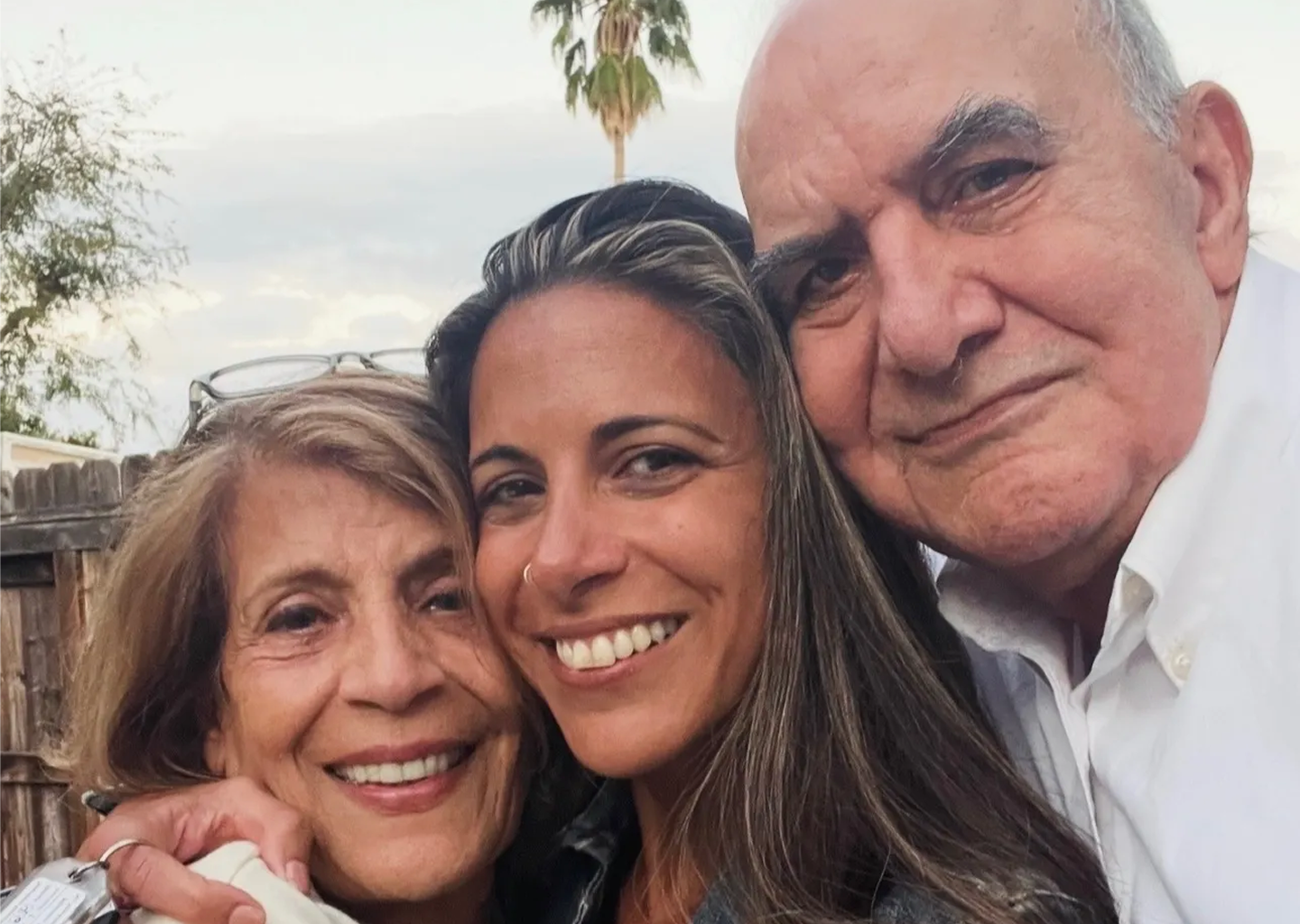
My parents arrived in the United States carrying more than suitcases. They carried degrees, professional identities, and years of expertise.
In Iran, they were respected professionals. They had taught, led, healed, and contributed meaningfully to society. They had lives of purpose.
And then, almost overnight, they became invisible.
Their credentials were not recognized. Their licenses did not transfer. Their knowledge, the same knowledge that had shaped lives and communities, suddenly held little official value. They were told, in quiet and not-so-quiet ways, that they would need to start over.
So they did.
Not because they lacked capability.
Because the system could not see them.
I was a baby when we arrived, so I did not experience this rupture directly. And yet, I grew up witnessing what it means to begin again after you have already arrived. I watched my parents navigate the exhaustion of rebuilding. I witnessed the quiet grief of losing professional identity and the determination required to reclaim it.
At the time, I could not have known that this experience would shape many of the questions that would guide my life.
Questions about identity.
About recognition.
About justice.
About belonging.
And ultimately, about what helps people feel seen.
Those questions led me in directions that, on the surface, may seem unrelated.
I became a prosecutor. I studied peace and justice. I worked in international development and humanitarian response. I became a social worker. I led a nonprofit focused on dialogue and inclusion. I completed doctoral research on immigrant experiences in higher education.
For years, I thought I was pursuing different interests.
Looking back, I see that I was following the same question.
What helps people flourish?
Years later, that question became the focus of my doctoral research.
I explored the experiences of newly arrived skilled immigrants navigating higher education in Massachusetts. These were not individuals lacking education, expertise, or ambition. Many had been professors, engineers, healthcare professionals, and leaders in their countries of origin.
Yet many arrived to find themselves facing a familiar reality.
Their credentials were questioned.
Their experience discounted.
Their identities disrupted.
Again and again, I heard stories that echoed what I had witnessed in my own family.
Migration was not simply a geographic transition.
It was an identity transition.
Participants described what it felt like to move from being recognized experts to newcomers whose capabilities were often overlooked. They spoke about returning to school, rebuilding careers, navigating unfamiliar systems, and trying to maintain confidence while starting over.
What struck me most was that the greatest challenges were not always logistical.
They were relational.
People were asking:
Do I belong here?
Will my experience matter?
Can I still be myself while adapting to this new environment?
One of the strongest findings from my research was that success was not determined by resilience alone.
It was shaped by relationships.
The presence of mentors.
The support of peers.
The willingness of institutions to recognize lived experience and prior knowledge.
The feeling of being welcomed rather than merely accommodated.
When people felt seen, they were more likely to persist, contribute, and thrive.
When they felt invisible, everything became harder.
That realization helped me understand something I had been observing for years.
Belonging is not a luxury.
It is not a bonus.
It is not emotional decoration.
Belonging changes outcomes.
As I reflected on my parents’ journey, my research, and my own experiences moving between cultures and communities, I began to see a common thread.
People do not simply need opportunities.
They need connection.
They need places where their stories matter.
They need spaces where they can show up as their full selves.
They need to be seen.
That understanding eventually became the foundation for Enroot.
At its core, Enroot is built on a simple belief: human connection is one of the most powerful forces for belonging.
Through shared meals, storytelling, and conversation, we create opportunities for people to move beyond labels and assumptions and encounter one another as human beings.
Food is often the doorway.
A meal slows us down.
A story opens us up.
Connection helps us remember our shared humanity.
Whether someone is an immigrant, a longtime resident, a student, a parent, a leader, or simply someone searching for community, the need is often the same.
We want to know that we matter.
We want to know that our stories count.
We want to know that there is a place for us.
Over the years, I have come to believe that many of the challenges we face, from loneliness and division to exclusion and disconnection, are, at their core, challenges of relationship.
Not because policy and systems do not matter.
They do.
Instead, because people are more likely to engage, contribute, and flourish when they feel connected to one another.
My parents’ story did not end in invisibility.
They rebuilt.
They contributed.
They created lives of meaning and impact.
The participants in my research are doing the same.
And every day, I meet people whose stories remind me that belonging is not something we achieve alone.
It is something we create together.
That may be the question that has shaped my life’s work.
Not how we help people fit in.
Instead, how we create communities where people can be fully seen.
Because when people are seen, something remarkable happens.
They begin to flourish.
And when people flourish, communities do too
Want more reflections like this?
Dr. Elika shares writing on belonging, nervous system work, and trauma-informed care — alongside coaching and workshops.
Explore coaching and workshops